Nationwide Transloading and Warehousing Services
Seamless Supply Chain Transfers
Transloading is the process of transferring cargo between different modes of transportation. At OLIMP, our transloading and warehousing services make it easy to move goods from ship to rail, truck or vice versa. We provide the infrastructure and expertise to ensure cargo flows smoothly from ports or rail terminals to your distribution centers, without unnecessary delays. By combining transloading with warehousing, you gain greater control over cargo flow, inventory accuracy and final‑mile performance.
- Nationwide coverage: services at every major U.S. port and rail hub
- Full‑service transloading and distribution: import/export handling, cross‑docking, palletizing and drayage
- Flexible capacity: bonded, temperature‑controlled and hazmat‑ready facilities
- Fast quotes: get rates and availability in minutes
Ready to improve efficiency? Click the Request a Quote button to connect with our logistics specialists and secure the right transloading facility for your needs.
Comprehensive Transloading & Warehousing Solutions
What sets our transloading services apart
- All major ports & rail hubs: We operate across key gateways such as Los Angeles/Long Beach, New York/New Jersey, Savannah, Seattle, Chicago and Miami, so your cargo never waits in line.
- Rapid cross‑dock facilities: Large, multi‑door warehouses near docks let us unload ocean containers and immediately reload goods onto outbound trailers or flatbeds, cutting transit time.
- Import & export expertise: Whether inbound or outbound, OLIMP manages customs‑bonded warehousing, palletizing, bulk handling and documentation. We bundle drayage, transloading and short‑term storage into one integrated service.
- Dedicated equipment: Our network includes chassis, lift trucks and specialized gear to ensure fast, safe transfers.
Benefits of integrated transloading & warehousing
Transloading combined with warehousing provides several advantages:
- Supply chain flexibility: Transloading operations allow businesses to redirect or consolidate freight as demand shifts.
- Cost reduction: By turning ocean containers faster and avoiding unnecessary drayage and chassis rentals, companies reduce demurrage and detention fees.
- Faster throughput: Efficient transfer from port to inland distribution shortens transit time and speeds order fulfilment.
- Improved equipment utilization: Optimised container and trailer rotation reduces empty miles and boosts asset use.
- Sustainability:Using rail for long‑haul segments and consolidating shipments lowers fuel consumption and carbon emissions.
How Our Transloading & Distribution Services Work
A typical shipment moves through these steps:
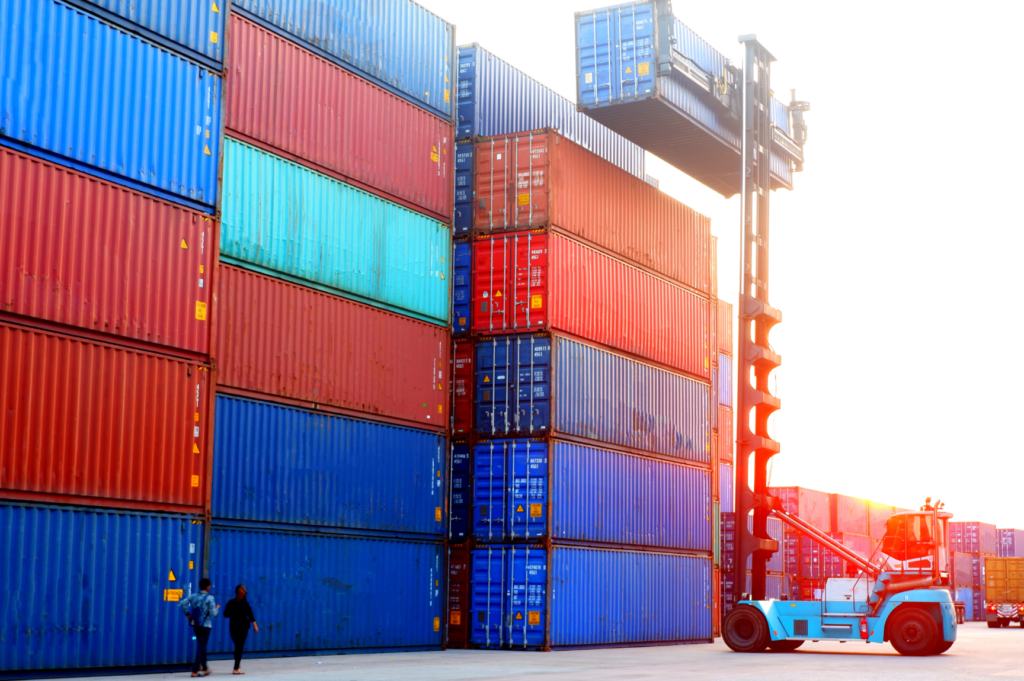
- Arrival at port or terminal: Goods arrive in shipping containers at a port or rail terminal.
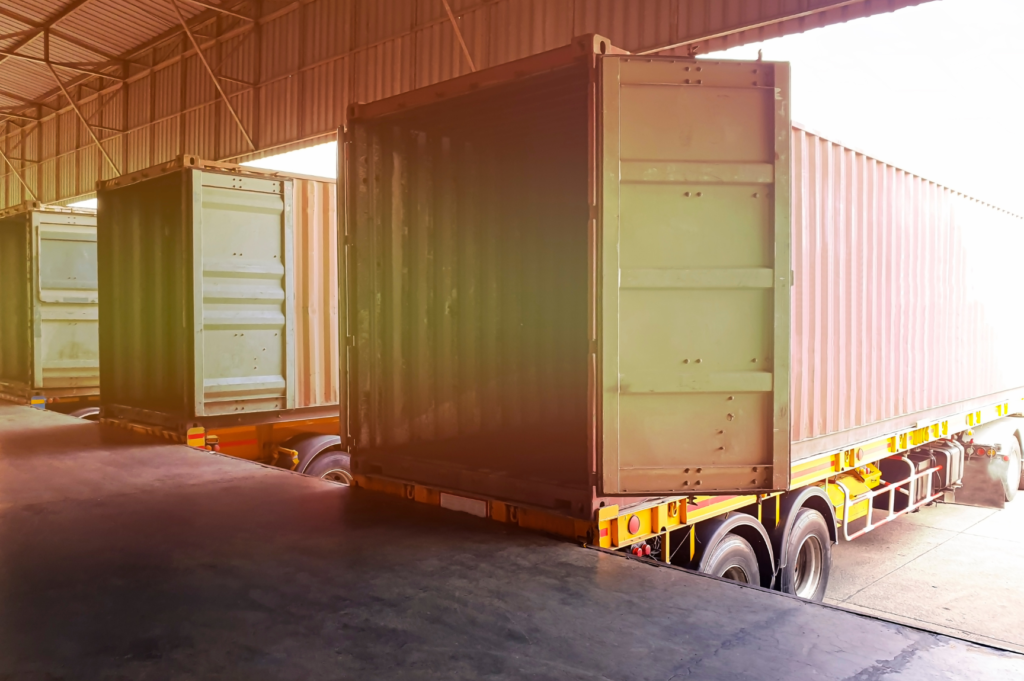
- Transfer to a transloading facility: Containers are transported to a nearby facility and unloaded. A transloading facility is a place where shipments are transferred from trucks to rail or from rail to trucks, making rail service available even when a customer isn’t located on a rail line.
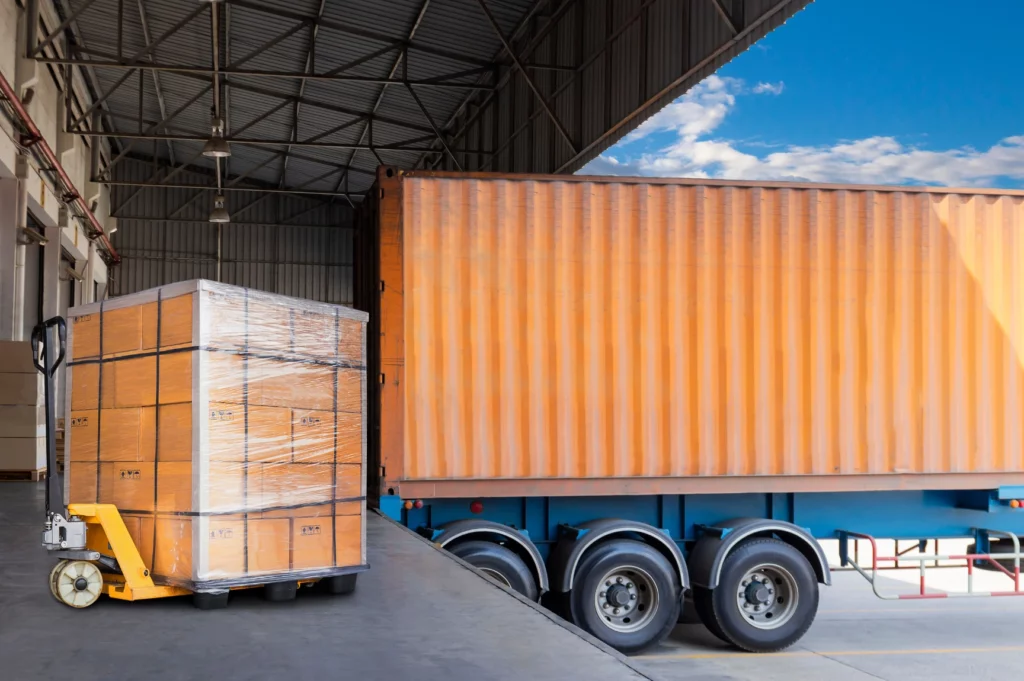
- Cargo repacking & consolidation: Goods are repacked, sorted or consolidated into domestic trailers or flatbeds suitable for their next destination. This may include palletizing, shrink‑wrapping or labeling.
- Mode change or final transport: After repacking, cargo is loaded onto the appropriate mode of transport, whether full‑truckload, less‑than‑truckload, domestic container or railcar.
- Timely delivery: The goods are delivered to their final destination, such as a distribution center, warehouse or retail location.
Value‑added services
- Palletizing and floor‑loaded unloading: We break down ocean containers on‑site and palletize floor‑loaded cargo into standard trailers, improving cost and transit efficiency.
- Flexible modal transfers: Shipments can shift between trucks, trailers, domestic containers or railcars depending on final destination.
- Connected distribution: Once unloaded, goods can be cross‑docked directly to outbound carriers. We coordinate last‑mile delivery via drayage or LTL carriers, effectively providing transloading and distribution under one roof.
Why Choose OLIMP’s Transloading Facilities
Our strategic network of transloading facilities is designed for speed, visibility and reliability:
- Strategic locations: Warehouses adjacent to major ports and rail yards allow us to move containers inland without unnecessary drayage. This proximity means faster turnarounds and lower fees.
- Industry‑leading technology: Real‑time tracking, electronic documentation and RFID scanning give you visibility across transloading and warehousing operations.
- Expert handling: Every OLIMP facility is vetted and staffed by trained professionals, ensuring safe and efficient cargo transfers.
- Scalable capacity: Our nationwide network adapts to seasonal demand with bonded, temperature‑controlled and hazmat‑ready space.
- Trusted by diverse industries: Retail, automotive, manufacturing, food & beverage and energy companies rely on our transload facilities to speed distribution and reduce costs.
Ready for flexible transloading services near you? Use our nationwide search to locate a transloading warehouse that fits your needs.
Frequently Asked Questions (FAQ) – OLIMP Warehousing
Q: How does transloading improve supply‑chain efficiency?
Transloading shortens transit time by quickly moving goods from ocean containers to domestic transport modes and reducing drayage and storage costs.
Q: Can OLIMP handle both import and export cargo?
Absolutely. We manage customs‑bonded warehousing, drayage and cross‑docking for inbound and outbound shipments, ensuring compliance and smooth transitions between modes.
Q: Is transloading suitable for my industry?
Industries such as retail, e‑commerce, automotive, manufacturing and energy benefit from transloading because it speeds distribution and lowers logistics costs.
Ready to streamline your warehousing needs?
Request a quote today and discover how OLIMP's tailored solutions can optimize your operations